
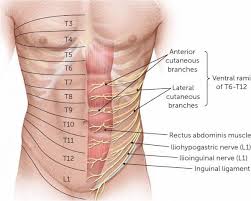
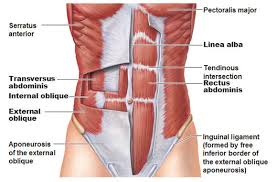
 Abdominal wall pain refers to pain originating from the structures of the abdominal wall itself—the muscles, fascia, nerves, and skin—rather than from internal organs.
Muscle strain is one of the most frequent causes, resulting from overuse, heavy lifting, sudden movements, or intense exercise, especially core work or coughing.
The pain typically worsens with movement or tensing the abdominal muscles.
Nerve entrapment syndromes occur when nerves running through the abdominal wall become trapped or irritated.
The most common is anterior cutaneous nerve entrapment syndrome (ACNES), which causes sharp, localized pain, often in a small spot that you can point to with one finger.
Hernias-inguinal, umbilical, incisional involve weakness in the abdominal wall allowing tissue to protrude through, causing pain and sometimes a visible bulge.
Post-surgical pain can occur after abdominal surgery from scar tissue, nerve damage, or mesh placement.
Trigger points in abdominal muscles can create referred pain patterns, and conditions like myofascial pain syndrome can affect the abdominal wall.
To distinguishing abdominal wall pain from internal pain a key test is **Carnett’s sign**: the pain typically increases when you tense your abdominal muscles by lifting your head and shoulders while lying down.
With internal organ pain, tensing the muscles usually provides some relief or doesn’t change the pain much.
Abdominal wall pain is also usually more superficial, can often be pinpointed to a specific spot, and worsens with specific movements or positions.