

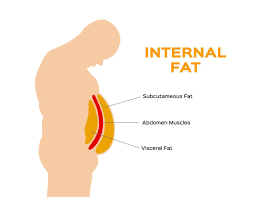
 Abdominal obesity is defined as excess fat accumulation in the abdominal region, particularly visceral fat around the internal organs, and is most commonly assessed by waist circumference or waist-to-hip ratio.
This pattern of fat distribution is distinct from general obesity, which is typically measured by body mass index (BMI), and is a stronger predictor of cardiometabolic risk, including type 2 diabetes, cardiovascular disease, and metabolic syndrome.
More than one in five with normal body mass index (BMI) have abdominal obesity. Abdominal obesity with normal BMI is consistently associated with cardio metabolic risk.
Abdominal obesity is defined as a waste circumference of at least 80 cm in females and 94 cm in males.
Clinical thresholds for abdominal obesity are generally set at a waist circumference greater than 102 cm (40 inches) in men and greater than 88 cm (35 inches) in women, or a waist-to-hip ratio above 0.9 for men and 0.85 for women.
The global prevalence of abdominal obesity is 45% overall and 22% among those with a normal BMI.
Abdominal obesities associated with hypertension, diabetes, high total cholesterol, and triglyceride levels.
These cutoffs are associated with increased risk of adverse health outcomes, even in individuals with a normal BMI.
Visceral fat, is the key component of abdominal obesity, and is metabolically active and contributes to insulin resistance, dyslipidemia, hypertension, and systemic inflammation.
Waist circumference is a simple, inexpensive, and widely recommended method for assessing abdominal obesity in clinical practice, though imaging modalities like CT and MRI provide more precise quantification of visceral adipose tissue.