
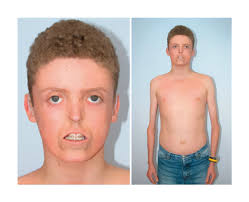
 Allan-Herndon-Dudley Syndrome (AHDS), also known as MCT8 deficiency, is an ultra-rare X-linked genetic disorder that disrupts brain development and causes severe intellectual and motor disabilities.
AHDS primarily affects males and is caused by mutations in the SLC16A2 gene, which provides instructions for making the monocarboxylate transporter 8 (MCT8) protein.
The MCT8 protein is a transporter that moves the thyroid hormone triiodothyronine (T3) into nerve cells in the developing brain.
Because T3 cannot enter the brain, nerve cells lack the signals needed for normal formation, growth, and communication (synapse development).
Excess T3 remains in the bloodstream, leading to toxic levels in other organs like the heart and liver.
Symptoms typically appear in the first few months of life.
Neurological: Severe global developmental delay, truncal hypotonia and later development of spasticity and involuntary movements-dystonia, choreoathetosis.
Intellectual: Moderate to profound intellectual disability occurs and is most affected individuals never acquire speech or the ability to walk independently.
Physical: failure to thrive, muscle wasting, a long and narrow face, and skeletal issues like scoliosis or pectus excavatum.
Metabolic: Increased heart rate (tachycardia), high blood pressure, and excessive sweating due to high peripheral T3 levels.
Diagnosis By a combination of clinical findings and laboratory tests:
Thyroid Profile: Characteristically shows high free T3, low free T4, and normal to slightly elevated TSH.
Genetic Testing: Molecular testing to identify a pathogenic variant in the SLC16A2 gene.
Imaging: Brain MRIs may show delayed myelination/maturation of the brain’s white matter).
There is currently no cure, and management is primarily supportive.
Supportive Care: Physical, occupational, and speech therapy; feeding assistance for malnutrition; and medications for seizures or spasticity.
The T3 analogue tiratricol (TRIAC), which can enter cells without the MCT8 transporter, has shown promise in reducing peripheral T3 levels and improving certain symptoms like heart rate and weight gain.