
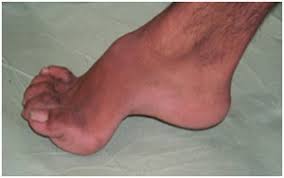
 Pes cavus, also known as “high arches,” is a foot morphology where the arch does not flatten even when bearing weight.
This structural elevation causes the foot to absorb shock poorly, placing excessive pressure on the ball and heel.
Key Characteristics: An abnormally high medial longitudinal arch.
Foot Alignment: Often includes a “varus” or inward tilt of the heel and “clawing” of the toes.
Stability: A tendency toward unstable ankles and frequent sprains.
Common Causes
Neurological Disorders: The most common cause, with approximately two-thirds of cases due to Charcot-Marie-Tooth (CMT) disease.
Other causes include cerebral palsy, spina bifida, and stroke.
Idiopathic: Arising spontaneously without a known underlying disease. Trauma: Malalignment following severe fractures or burns.
Symptoms & Complications: Pain: Focused on the ball and heel of the foot. Skin Issues: Thick calluses on the side, heel, or ball of the foot. Structural Changes: Development of hammertoes or claw toes. Gait Issues: Difficulty finding shoes and pain that may radiate to the knees, hips, and lower back.
Management Treatment aims to create a “plantigrade” foot, one that sits flat on the ground.
Use of custom orthotics to redistribute weight, physical therapy for stretching/strengthening, and specialized footwear.
Surgical: Reserved for severe cases or when conservative measures fail.
Surgery may involve osteotomies or tendon transfers to rebalance the foot.