
 Transcarotid artery reconstruction (TCAR) refers to surgical procedures to repair or restore the carotid arteries, which supply blood to the brain.
These procedures are performed to prevent stroke in patients with carotid artery disease.
It is a minimally invasive technique that combines elements of open surgery and endovascular approaches.
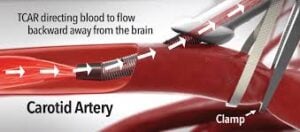
The procedure involves direct access through a small incision at the base of the neck to place a stent in the carotid artery while using temporary flow reversal to protect the brain from embolic debris.
The procedure differs from traditional transfemoral carotid artery stenting by avoiding catheter manipulation through the aortic arch.
It uses direct surgical access to the common carotid artery through a small neck incision, combined with a flow-reversal neuroprotection system to treat carotid artery stenosis.
Carotid Endarterectomy (CEA) is the traditional open surgical approach where the carotid artery is opened, and plaque is physically removed from inside the vessel.
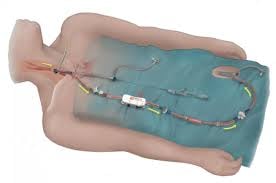
TCAR establishes direct common carotid access and initiates cerebral protection through an extracorporeal arteriovenous shunt from the carotid artery to the femoral vein before manipulating the stenotic lesion.
The technique involves placing an arterial sheath directly into the common carotid artery and connecting it to a venous sheath in the femoral vein, allowing for dynamic flow reversal throughout the entire procedure—including lesion crossing, ballooning, and stenting.
This flow-reversal system carries embolic debris away from the cerebral circulation during angioplasty and stent placement.
This approach enables complete cerebral protection before any manipulation of the atherosclerotic plaque.
These procedures are typically indicated for: Significant carotid artery stenosis (narrowing), usually 70% or greater in symptomatic patients or 80% or greater in asymptomatic patients
Patients who’ve had transient ischemic attacks (TIAs) or minor strokes
Prevention of future strokes in high-risk patients
Key Advantages of TCAR
Smaller incision and shorter recovery time compared to traditional surgery.
Lower risk compared to transfemoral carotid stenting in certain high-risk patients.
Flow reversal system reduces stroke risk during the procedure
Option for patients at high risk for conventional surgery
Choosing between TCAR, CEA, or medical management depends on factors including the patient’s anatomy, surgical risk, age, comorbidities, and whether they’ve had symptoms.
Associated with perioperative stroke rates of 1.2-1.4% in prospective studies.
The procedure is associated with significantly lower stroke rates compared to transfemoral carotid artery stenting, particularly in symptomatic patients, and demonstrates comparable outcomes to carotid endarterectomy while avoiding cranial nerve injury.
Relative contraindications include lesions less than 5 cm from the clavicle, and severe target vessel tortuosity.