
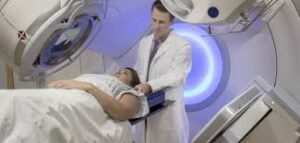
 Carbon ion radiation (CIRT) therapy is an advanced, precise radiation treatment using heavy carbon particles to deliver intense, targeted energy to cancer cells, causing irreparable DNA damage, especially effective for radioresistant tumors (like sarcomas, pancreatic, or head/neck cancers) that resist standard X-ray or proton therapy.
It offers superior physical precision (Bragg peak) and biological effectiveness (higher Relative Biological Effectiveness or RBE) to spare surrounding healthy tissue.
It offers superior physical dose distribution and enhanced biological effectiveness compared to conventional photon-based radiotherapy and proton therapy.
It is costly and less common than photon therapy.
Heavy ions: Carbon nuclei (carbon ions) are accelerated to high energies.
These ions deposit most of their energy at a specific depth (Bragg peak), minimizing exit dose.
Carbon ions create denser ionization, leading to more complex, lethal DNA damage in cancer cells, particularly those with low oxygen or resistant to other radiation.
Advantages over standard radiation
Higher relative biological effectiveness: More effective at killing cancer cells, especially radioresistant ones.
Precision: More conformal to the tumor, sparing normal tissue better than protons or X-rays.
Immune response: May trigger an immune response against the cancer.
Can sometimes achieve results in fewer sessions.
Carbon ions possess unique properties that distinguish them from conventional radiation.
Carbon ion radiation delivers precise dose distribution with a characteristic Bragg peak, allowing dose escalation to tumors while minimizing radiation to adjacent normal tissues.
The lateral scattering is reduced compared to protons, providing better dose conformity.
Biologically, carbon ions have high linear energy transfer (LET) and a relative biological effectiveness (RBE) of 3-4, compared to 1.1 for protons.
Enhanced RBE results from clustered DNA damage that overwhelms cellular repair mechanisms.
Carbon ions demonstrate reduced oxygen enhancement ratio, making them particularly effective against hypoxic, radioresistant tumors.
They also show reduced dependence on cell cycle stage and fractionation, allowing for hypofractionated treatment regimens.
Its most established indications include skull base chordomas and chondrosarcomas, where CIRT provides benchmark disease control with 3-year local control rates of 81% and 100%, respectively.
For head and neck cancers, especially radioresistant histologies like adenoid cystic carcinoma and mucosal melanoma, CIRT offers superior outcomes compared to conventional radiotherapy.
Hepatocellular carcinoma larger than 30 mm shows excellent 5-year local control and overall survival rates with minimal radiation-induced liver damage.
Applications include locally advanced non-small cell lung , bone and soft tissue sarcomas, renal cell carcinoma, and retroperitoneal sarcomas.
CIRT has also shown promise for locally recurrent rectal cancer and pancreatic cancer.
The ability to deliver hypofractionated regimens (4-12 fractions over 1-3 weeks) represents a significant practical advantage, reducing treatment time compared to conventional radiotherapy while maintaining efficacy.
CIRT is particularly valuable for reirradiation of recurrent malignancies, demonstrating favorable clinical outcomes with relatively low high-grade toxicity rates.
The primary barrier to widespread adoption is the high initial capital cost of heavy ion facilities.
Early dose-escalation studies identified severe late complications in the rectosigmoid colon and esophagus, which were subsequently mitigated through improved dose levels and irradiation techniques.