
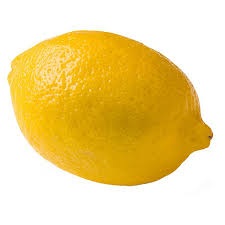
 The lemon is a species of small evergreen tree in the Citrus genus of the flowering plant family Rutaceae.
A true lemon is a hybrid of the citron and the bitter orange.
The yellow fruit of the lemon tree is used throughout the world, primarily for its juice.
The pulp and rind are used in cooking and baking.
The juice of the lemon is about 5–6% citric acid, giving it a sour taste.
This makes it a key ingredient in drinks and foods such as lemonade and lemon meringue pie.
In 2022, world production was 22 million tonnes, led by India with 18% of the total.
The lemon tree produces a pointed oval yellow fruit.
Botanically a hesperidium, a modified berry with a tough, leathery rind.
The rind is divided into an outer colored layer or zest, which is aromatic with essential oils, and an inner layer of white spongy pith.
Inside the lemon are multiple carpels arranged as radial segments.
The seeds develop inside the carpels.
The space inside each segment is a locule filled with juice vesicles.
Lemons contain many phytochemicals, including polyphenols, terpenes, and tannins.
Lemon juice contains slightly more citric acid than lime juice (about 47 g/L), nearly twice as much as grapefruit juice, and about five times as much as orange juice.
Nutrition Lemon, raw, without peel Nutritional value per 100 g (3.5 oz)
Energy 121 kJ (29 kcal)
Carbohydrates 9.32 g
Sugars 2.5 g
Dietary fiber 2.8 g
Fat 0.3 g
Protein 1.1 g
Vitamins and minerals
Lemon is a rich source of vitamin C, providing 64% of the Daily Value in a 100 g reference amount.
Other essential nutrients are low in content.
Culinary
Lemon juice and rind are used in a wide variety of foods and drinks, the juice for its sour taste, from its content of 5–6% citric acid.
The whole lemon is used to make marmalade, lemon curd and lemon liqueurs such as Limoncello.
Lemon slices and lemon rind are used as a garnish for food and drinks.
Lemon zest, the grated outer rind of the fruit, is used to add flavor to baked goods.
The juice is used to make lemonade and some cocktails.
It is used in marinades for fish, where its acid neutralizes amines in fish.
In meat, the acid partially hydrolyzes tough collagen fibers, tenderizing it.[
Lemon juice is used as a short-term preservative on certain foods that tend to oxidize and turn brown after being sliced (enzymatic browning), such as apples, bananas, and avocados: its acidity suppresses oxidation by polyphenol oxidase enzymes.
Lemon peel is used in the manufacture of pectin, a gelling agent and stabilizer in food and other products.
Lemon oil is extracted from oil-containing cells in the skin.
The leaves of the lemon tree are used to make a tea and for preparing cooked meats and seafoods.
Lemon oil aroma may contribute to relaxation.
Lemon juice is sometimes used to increase the blonde color of hair, acting as a natural highlight after the moistened hair is exposed to sunlight.
This works because citric acid acts as bleach.