
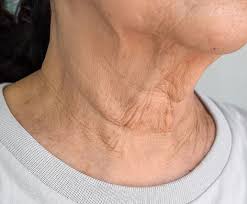
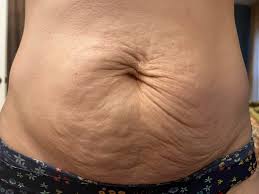
 Skin laxity refers to the loss of firmness, elasticity, and tightness of the skin, resulting in sagging, wrinkling, and a less youthful appearance.
It is primarily due to the deterioration or reduced production of key dermal extracellular matrix (ECM) components: collagen and elastic fibers, which are responsible for maintaining skin structure and resilience.
Skin laxity results mainly from aging, massive weight loss, pregnancy, or genetics.
Aging and chronic exposure to ultraviolet (UV) radiation are major contributors to skin laxity.
Aging and UV radiation impair fibroblast function and increase the activity of enzymes, like elastase, that degrade elastic fibers, leading to reduced skin elasticity and sagging.
It occurs when collagen and elastin fibers in the dermis weaken and production drops dramatically after age 30–35.
The process is also influenced by genetic factors and can be seen in connective tissue disorders such as cutis laxa, where mutations or acquired defects in ECM proteins result in loose, redundant, and inelastic skin.
Collagen I/III decrease by ~1–2% per year after 30,
Elastin fragmentation increases with age.
Photoaging (UV damage)
Metaloproteinases destroy collagen, solar elastosis
Rapid/massive weight loss-Skin envelope doesn’t shrink fast enough (common after bariatric surgery or GLP-1 drugs like semaglutide)
Pregnancy
Hormonal + mechanical stretching
Genetics / ethnicity
Thinner skin (Caucasian/Asian) lose tone faster than thicker skin types.
Clinical Grading Scales
Merz Skin Laxity Scale (face/neck): 0 (none) to 4 (very severe) Fabi–Bolton Scale (body): mild, moderate, severe, very severe Global Aesthetic Improvement Scale (GAIS)
Treatment options for skin laxity include noninvasive energy-based devices-radiofrequency, ultrasound, lasers, injectable fillers, and surgical procedures, with the choice depending on severity, location, and patient preference.
Monopolar radiofrequency (RF) devices stimulate fibroblast activity and collagen production, leading to sustained skin tightening.
Monopolar radiofrequency (RF) devices have demonstrated significant efficacy and safety for facial, neck, and body skin laxity.
Fractional and nonablative lasers also improve skin laxity by inducing neocollagenesis and dermal remodeling.
Microfocused ultrasound (MFU) delivers energy to deeper tissue layers, promoting robust collagen remodeling and durable tightening, and is effective for the face, neck, chest, and buttocks.
Minimally invasive options include RF microneedling and bipolar RF, which combine subdermal adipose remodeling with skin tightening and are suitable for patients not candidates for surgery or those with recurrent laxity.
Endodermal RF is another minimally invasive approach for skin rejuvenation and tightening.
Injectable fillers such as hyperdilute calcium hydroxylapatite (CaHA) can be used alone or in combination with MFU for skin tightening and neocollagenesis, especially in areas like the chest and buttocks.
Ablative lasers- (CO₂, fractional) are reserved for more significant laxity and sun damage, providing tissue tightening through controlled dermal heating and wound healing.
Surgical procedures-facelifts, neck lifts, remain the gold standard for severe skin laxity but involve more downtime and risk.
Combination approaches may enhance outcomes for facial skin laxity.
Most noninvasive and minimally invasive treatments have excellent safety profiles and high patient satisfaction.
Lifestyle & Prevention: Maintain stable weight (avoid yo-yo or rapid loss >1–2 kg/week) Strength training → increases dermal thickness and improves appearance of laxity Sunscreen daily (UV is the #1 preventable cause) Stop smoking as smoking accelerates elastin breakdown 5×