
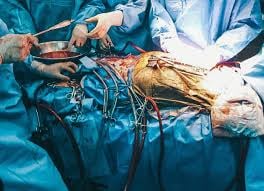
Bleeding is a significant and common complication following cardiac surgery, occurring in roughly 2–15% of patients, depending on type of procedure.
Bleeding is a major cause of morbidity and can substantially increase mortality, transfusion requirements, hospital stay, and risk of serious complications such as infection and organ dysfunction.
Excessive bleeding after cardiac surgery may result from either technical surgical issues, such as a displaced suture or vessel injury, or coagulopathy.
Surgical sources of bleeding are found in the majority of patients requiring re-exploration, but coagulopathy also commonly contributes.
Bleeding can be due to inadequate surgical hemostasis or microvascular bleeding caused by bypass induced platelet dysfunction and/or depletion of coagulation factors that impairs thrombin generation.
The most common method of restoring coagulation factors is through transfusion of thawed, frozen plasma, which occurs in approximately 25% of cardiac surgeries.
Plasma is generally considered safe with low rates of transfusion related, acute lung injury of less than .01% and severe allergic reactions of less than 0.1%.
The most common adverse event in this setting is transfusion associated circulatory overload at 0.1%.
The rapid administration of the amount of plasma needed to treat coagulopathy is 750 to 1000 mL of frozen plasma and can be detrimental, particularly in the presence of right ventricular dysfunction.
Prothrombin complex concentrates are a class of blood products that attempt to address the limitations of plasma, but providing concentrated doses of factors II, VII, IX, and X in a small volume typically 80 mL.
Prothrombin complex factor-4 derived from pooled plasma and contains vitamin K dependent coagulation factors and the anticoagulant proteins C and S.
The advantages of prothrombin complex concentrate relative to frozen plasma are that it undergoes the processes of purification, concentration, and pathogen reduction, and contains a standard amount of coagulation factors, and does not require thawing or ABO matching.
Prothrombin complex concentrate in a randomized trial was found to be superior in its hemostatic efficacy and safety advantage to fresh frozen plasma among patients requiring coagulation factory replacement for bleeding during cardiac surgery.
Excessive post-operative bleeding is often defined using criteria such as drainage of more than 500ml in the first hour, more than 400ml each of the first two hours, or total losses exceeding 1,000ml in 4–12 hours, and sometimes as requirement of massive transfusion offive or more units of red blood cells.
Massive bleeding can be defined by transfusion of more than ten units of red blood cells or loss >2,000ml/12 hours.
Risk factors for bleeding include advanced age, emergency or complex procedures, poorly controlled diabetes, pre-operative anemia, antiplatelet drug use, platelet dysfunction, and prolonged cardiopulmonary bypass.
Initial management employs blood product transfusion and hemostatic agents.
Re-exploration is required in a minority of patients, with rates ranging 1–11%.
It significantly increases risk for poor outcomes: mortality after re-exploration for bleeding may reach 15%, versus 2–3% in non-reexplored patients.
Early re-exploration is associated with lower mortality, supporting prompt surgical intervention when conservative measures fail.
Complications of bleeding in cardiac surgery include: Increased transfusion requirements, which carry their own risks Infection, including sternal wound infection Prolonged mechanical ventilation and ICU/hospital stay Renal dysfunction and other organ failure
Increased risk of further cardiovascular complications and mortality.