
 Archaea are a group of single-celled microorganisms that are similar to bacteria but differ in several important ways.
They form one of the three domains of life: Bacteria, Archaea, and Eukarya.
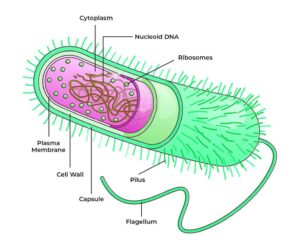
Cell Type: Prokaryotic-no nucleus or membrane-bound organelles.
Cell Wall: Lacks peptidoglycan, unlike bacteria, instead, contains unique molecules like pseudopeptidoglycan or proteins.
Membrane Lipids: Have ether-linked lipids which are more chemically stable, while bacteria and eukaryotes have ester-linked lipids.
Genetic Machinery: Although prokaryotic, their DNA replication, transcription, and translation machinery is more similar to eukaryotes than to bacteria.
Environments: Many archaea are extremophiles, thriving in extreme conditions: Thermophiles -heat-loving Halophiles salt loving Acidophiles acidic environments
Methanogens found in anaerobic environments like swamps or guts of ruminants.
Importance of Archaea: They participate in nutrient cycling of nitrogen, sulfur, carbon.
Biotechnology: Enzymes from archaea are used in high-temperature processes like PCR.
Help scientists understand the early evolution of life and the origin of eukaryotes.
Archaea are a distinct domain of single-celled microorganisms that represent one of the three major branches of life, alongside bacteria and eukaryotes.
Archaea are fundamentally different from bacteria in their cellular machinery, genetics, and biochemistry.
Archaea are also found in ordinary soil, oceans, and even the human microbiome.
Archaea are thought to be among the earliest life forms on Earth, potentially dating back 3.5 billion years.
Archaea play crucial roles in biogeochemical cycles, particularly in carbon and nitrogen cycling.
Methanogens contribute significantly to atmospheric methane, while ammonia-oxidizing archaea are important in soil nitrogen processes.