
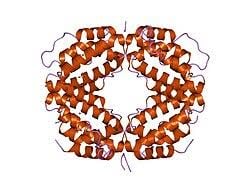
 Interferon gamma (IFN-γ) is a critical pro-inflammatory cytokine and the sole member of the type II interferon family.
Interferon gamma (IFN-γ) is a cytokine—a signaling protein that immune cells use to communicate.
It is the only type II interferon.
Its main job is to activate and coordinate immune defenses, especially against microbes that survive inside cells.
IFN-γ is produced mainly by natural killer (NK) cells and activated T cells.
UIt helps the immune system by: Activating macrophages, cells that engulf and destroy microbes. Increasing antigen presentation—the display of pieces of microbes or abnormal cells so T cells can recognize them. Supporting cell-mediated immune responses against infections and tumors.
It is encoded by the IFNG gene located on chromosome 12q15.
Key Cellular Sources
T Lymphocytes: CD4 T helper type 1 (Th1) cells and CD8⁺ cytotoxic T cells.
Innate Immune Cells: Natural Killer (NK) cells, NKT cells, γδ T cells, and to a lesser extent, macrophages and dendritic cells.
Its production is heavily stimulated by cytokines like IL-12 and IL-18 during an immune response.
Mechanism of Action
IFN-γ acts as an antiparallel homodimer that binds to the interferon-gamma receptor (IFNGR), a heterodimeric complex consisting of IFNGR1 and IFNGR2.
JAK-STAT Signaling: Binding activates the JAK1 and JAK2 kinases, leading to the phosphorylation and homodimerization of STAT1.
It sends instructions through a signaling pathway called JAK–STAT, which switches on immune-response genes.
Although this helps fight infection, excessive or prolonged activity can also contribute to inflammation and tissue damage.
Gene Transcription: STAT1 homodimers translocate to the nucleus and bind to GAS (Gamma-Activated Site) elements, turning on hundreds of interferon-stimulated genes (ISGs).
Biological Functions
Macrophage Activation: Transforms macrophages into a highly microbicidal and tumoricidal (M1-like) state, boosting the production of reactive oxygen species and nitric oxide.
Antigen Presentation: Upregulates MHC class I and class II molecules on antigen-presenting cells, enhancing recognition by T cells.
Immune Polarization: Promotes Th1 cell differentiation while actively suppressing Th2 and Th17 responses.
Antiviral and Antibacterial Defense: Coordinates cellular defenses against intracellular pathogens (such as Mycobacterium tuberculosis) and viral infections.
Anti-Tumor Effects: Inhibits tumor cell proliferation, promotes apoptosis, and can suppress angiogenesis in the tumor microenvironment.
Therapeutic Uses: Recombinant interferon gamma (such as Actimmune) has been used medically, notably in managing chronic granulomatous disease (CGD) and severe malignant osteopetrosis, and is researched for various pulmonary and fibrotic conditions.
Diagnostic Applications: The Interferon-Gamma Release Assay (IGRA) (e.g., QuantiFERON) measures IFN-γ release by T cells exposed to mycobacterial antigens to diagnose latent tuberculosis infection.
Dysregulated or excessive IFN-γ signaling is implicated in inflammatory and autoimmune disorders, including Crohn’s disease, rheumatoid arthritis, graft-versus-host disease (GVHD), and lupus nephritis
As a medication: a manufactured version, interferon gamma-1b, is used to enhance immune defenses in chronic granulomatous disease, an inherited immune disorder.
Side effects can include fever, body aches, fatigue, and injection-site reactions.