
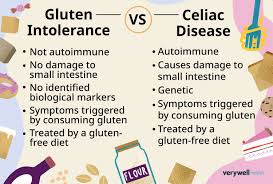
 Non-celiac gluten sensitivity (NCGS) refers to the subset of persons who report improvement in GI symptoms when they discontinue gluten-containing foods.
NCGS is an umbrella term used to describe people with the gastrointestinal or non-gastrointestinal symptoms that improve when they avoid gluten and reoccur when they reintroduce it into the diet, despite not having a formal diagnosis of celiac disease.
non-– Celiac disease is common around the world and affects about one and 10 people globally.
This process contrasts with celiac disease (CD), an autoimmune disease that causes inflammation and tissue damage in the small intestine, which can be diagnosed by upper endoscopic biopsy.
Many studies suggest that the irritable bowel syndrome (IBS) has patients with undiagnosed celiac disease.
It is suspected that a significant fraction of IBS patients in whom CD has been ruled out may have NCGS.
Note that serologies for celiac disease and biopsy can be falsely normal if the patient is on a gluten-free diet.
Adults always need a biopsy to confirm suggestive serologies for celiac disease.
Only about 17% of the 1.8 million-person US celiac population actually has a diagnosis and is on a gluten-free diet.
A similar number, 1.6 million, are currently on a gluten-free diet without a diagnosis of CD.
Studies suggesting genetic similarities and symptom resolution with gluten cessation in symptomatic individuals, despite negative duodenal biopsies while consuming gluten.
Some studies have shown biopsy-negative persons with serologic markers for CD have symptom resolution when off gluten, diarrhea in particular.
The most common G.I. symptom among people with the self diagnosed, gluten or wheat sensitivity was bloating, followed by abdominal discomfort and abdominal pain.
Fatigue is the most frequent reported non-G.I. symptom.
Some patients report, constipation, diarrhea, headache, nausea, rash, and joint pain.
Self-reported non-celiac gluten sensitivity is two times more common than females than males, and strongly associated with anxiety, depression, and irritable bowel syndrome.
Some patients who believe their sensitive to gluten may actually be reacting to fermentable oligosaccharides, disaccharides, monosaccharides and polyols or FODMAPS.
Psychological factors, and the gut brain axis may play a role in the pathophysiology of non-celiac gluten sensitivity.
management is a gluten free diet.