
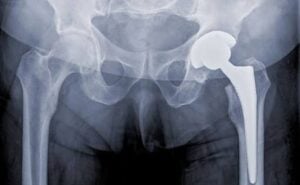
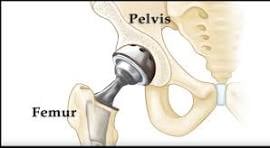
 A hip prosthesis is an artificial joint used to replace a damaged or diseased hip.
Hip prostheses replace a damaged or worn hip joint, usually due to arthritis, fracture, or joint deterioration.
During a total hip arthroplasty, a surgeon removes the worn-out ball (femoral head) and socket (acetabulum) and replaces them with metal, ceramic, and hard plastic prosthetic components to reduce pain and restore function.
A standard artificial hip implant mimics the natural ball-and-socket action and consists of four main parts:
The Femoral Stem: A metal component inserted into the hollow center of the femur.
The Femoral Head (Ball): Replaces the natural ball at the top of the femur.
It is typically made of highly polished metal or ceramic.
Metal (titanium, cobalt-chromium) stem and ball Ceramic or metal ball Plastic (polyethylene), ceramic, or metal socket lining Common combos: metal-on-polyethylene, ceramic-on-ceramic, ceramic-on-polyethylene
The Acetabular Cup: A metal shell that replaces the damaged socket in the pelvic bone.
The Liner: A spacer—usually made of highly cross-linked plastic (polyethylene) or ceramic—fitted inside the metal cup to serve as smooth, artificial cartilage.
Fixation
Prosthetic components are secured to the bone using one of two methods:
Cemented: Surgical bone cement is used to anchor the components to the bone.
Cementless: The components are designed to fit tightly against the bone.
Cemented bone cement anchors the implant
Cementless/press-fit (bone grows into a porous implant surface)
Hybrid (mix of both)
They are often coated with a porous material that encourages the patient’s natural bone to grow into and fuse with the implant.
Following a hip replacement procedure, patients typically participate in physical therapy to regain strength and mobility.
High-impact activities, which can lead to loosening or wear over time.
Total hip replacement (THR)– replaces both the ball (femoral head) and socket (acetabulum)
Hemiarthroplasty– replaces only the ball, socket left intact; often used after certain fractures
Resurfacing– caps the femoral head instead of removing it; less common now
Lifespan
Modern implants typically last 15–25+ years, though this varies with activity level, weight, and implant type.
Most people walk with assistance within a day, use a cane/walker for weeks, and resume most normal activities within 3–6 months.