
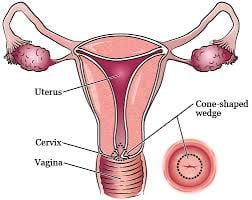
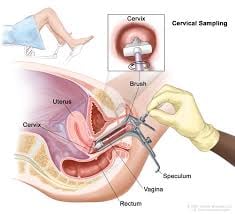
 A cone biopsy (cervical conization) is a minor surgical procedure to remove a cone-shaped wedge of abnormal tissue from the cervix.
It is typically performed as an outpatient procedure to diagnose or treat precancerous cells and early-stage cervical cancer.
Acone biopsy is recommended when an abnormal Pap test or colposcopy indicates:
Precancerous changes (such as CIN II or CIN III). Very early-stage cervical cancer (Stage 0 or IA1). A need to determine the exact depth or extent of abnormal cells.
The tissue can be removed using a surgical scalpel (cold knife conization), a laser, or a heated wire loop (LEEP procedure).
Anesthesia: It can be performed under local, regional (spinal/epidural), or general anesthesia.
The removed tissue is sent to a lab where a pathologist examines it to ensure all abnormal cells have been completely removed.
Mild cramping and a watery, bloody discharge are normal and can last for 1 to 3 weeks.
Cramping during and after similar to period cramps.
Vaginal discharge and light bleeding for 2–4 weeks
Avoid tampons, sex, and heavy lifting for 4–6 weeks while healing
Full healing takes about 4 to 6 weeks.
Activity restrictions: For the first few weeks, you will need to avoid sexual intercourse, using tampons, douching, and taking tub baths to allow your cervix to heal.
Rare risks include excessive bleeding, infection, scarring, or a slightly increased chance of premature delivery in future pregnancies.
Two main types
LEEP (Loop Electrosurgical Excision Procedure) — uses a thin wire loop with electrical current; most common, done in-office under local anesthesia
Cold knife cone (CKC) — uses a scalpel; done in the OR under general or spinal anesthesia; preferred when margins need to be very precise
Procedure takes 10–30 minutes
Risks
Bleeding or infection-uncommon Cervical stenosis Slightly increased risk of preterm birth in future pregnancies, particularly with deeper excisions
Follow-up A follow-up Pap smear or HPV test is typically done at 6 months to confirm clear margins and monitor for recurrence.