
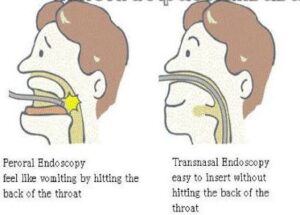
 Transnasal endoscopy (TNE) is generally better tolerated, safer, and faster than conventional oral endoscopy, often eliminating the need for sedation.
TNE uses a thinner scope passed through the nose, causing less gagging, whereas conventional endoscopy allows for better imaging and therapeutic, .higher-resolution diagnostics.
TNE enters through the nasal passage, bypassing the gag reflex, while conventional endoscopy enters through the mouth.
TNE is typically performed without IV sedation, allowing patients to return to normal activities immediately.
Conventional endoscopy often requires sedation.
TNE offers superior patient tolerance and lower pharyngeal discomfort.
TNE carries lower risk, though mild, minor epistaxis can occur.
Conventional endoscopes provide higher-resolution images and have wider working channels, m.Making them superior for complex therapeutic procedures.
TNE is more cost-effective due to reduced, or eliminated, costs associated with sedation and anesthesia.
Nasal Endoscopy (TNE): Generally favored for routine diagnostics, screening, and patients with a severe gag reflex or those needing to avoid sedation.
Conventional Endoscopy: Favored for therapeutic interventions, such as complex biopsies, removal of large polyps, or cases requiring high-resolution imaging.
Transnasal Endoscopy
Thin scope (~5mm) passed through the nose into the esophagus/stomach Patient typically awake, no sedation needed Done in office or clinic setting Lower cost, faster recovery Patient can speak during procedure Good tolerance — gag reflex largely bypassed Image quality slightly lower than conventional, but adequate for Barrett’s surveillance Can be unsedated — useful for frail or elderly patients
Conventional (Transoral) Endoscopy Standard scope (~9–10mm) passed through the mouth Usually requires conscious sedation or anesthesia Done in endoscopy unit/hospital setting Higher cost, requires escort home post-procedure Superior image quality and therapeutic capability (biopsies, interventions) Gold standard for diagnosis and staging Better for complex cases or when intervention is likely needed
Head-to-Head for Barrett’s
TNE is increasingly used for Barrett’s screening in low-risk patients — it’s well tolerated and cost-effective.
Conventional endoscopy remains preferred when therapeutic intervention, detailed staging, or high-quality imaging is needed.