
 Bronchoplasty is a surgical procedure used to repair or reconstruct a bronchus.
Bronchoplasty’s primary goal is often lung-parenchyma preservation, allowing surgeons to remove diseased tissue—such as tumors or narrowings—without having to remove an entire lung or lobe.
The procedure is most frequently used to treat:
Central Airway Tumors: Especially low-grade malignancies like [ carcinoid tumors, mucoepidermoid carcinoma, and early-stage lung cancer.
Bronchial Stenosis: Abnormal narrowing of the airway caused by tuberculosis, trauma, or complications from lung transplantation, atelectasis:.
Types of Procedures
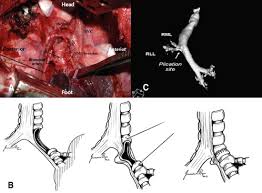
Sleeve Resection: A segment of the bronchus is removed, and the two healthy ends are sewn back together-anastomosis.
Wedge Bronchoplasty: Only a wedge-shaped portion of the bronchial wall is removed and repaired, typically for smaller tumors.
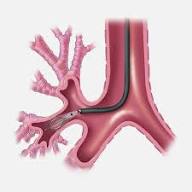
Balloon Bronchoplasty: A less invasive endoscopic procedure where a balloon is inflated inside the airway to stretch open a stricture or narrowing..
Bronchial thermoplasty (BT) is a minimally invasive, non-drug procedure designed to treat severe asthma in adults whose symptoms are not well-controlled by standard maintenance medications like inhaled corticosteroids and long-acting bronchodilators.
The procedure uses [radiofrequency energy to apply mild heat (approximately 65°C or 149°F) to the airway walls.
This heat reduces the amount of excess smooth muscle tissue in the lungs, which is the tissue that constricts during an asthma attack, thereby making it easier to breathe and reducing the frequency of severe attacks.
Bronchoplasty: Clinical trials and registries have shown several significant long-term benefits.
32% reduction in severe asthma attacks. 84% reduction in asthma-related emergency room visits. 73% reduction in asthma-related hospitalizations. 66% reduction in days lost from work, school, or daily activities. Improved quality of life maintained for at least 5 to 10 years.
The treatment is typically completed in three separate outpatient sessions, usually scheduled about three weeks apart to treat different sections of the lungs (right lower lobe, left lower lobe, and both upper lobes).
A pulmonologist inserts a thin, flexible tube bronchoscope through the mouth or nose into the lungs while the patient is under moderate sedation or general anesthesia.
Technique: A small catheter is passed through the bronchoscope.
Its tip features an expandable wire array that contacts the airway wall to deliver 10-second bursts of heat.
Each session lasts about 45 minutes to an hour.
Patients are usually monitored for 2–4 hours afterward and discharged the same day.
Risks:
Temporary Flare-ups- temporary worsening of asthma symptoms (such as wheezing or coughing) within the first few days after the procedure, which typically resolves within a week.
Rare but serious complications can include lung collapse, atelectasis, respiratory infection, or bleeding.
Eligibility: BT is generally for adults (18+) who are non-smokers and do not have implantable electronic devices like pacemakers.
BT does not cure asthma; patients must continue their maintenance medications as prescribed by their doctor.
Surgical Approaches for bronchoplasty:
Open Thoracotomy: It is becoming less common for simpler cases.
Video-Assisted Thoracoscopic Surgery (VATS)
Robotic-Assisted Surgery: Using systems like the da Vinci platform link.to perform precise reconstructions.
Potential complications include anastomotic stenosis at the surgical site, fistulas, and temporary hoarseness.
Early diagnosis and treatment of any narrowing—especially within 6 months of a lung transplant—typically lead to better long-term outcomes.