
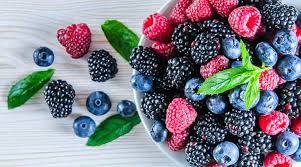
 Anthocyanins are naturally occurring pigments that belong to a larger class of compounds called flavonoids.
They’re responsible for the vibrant red, purple, and blue colors in many fruits, vegetables, and flowers.
Anthocyanins are water-soluble pigments found in plant cell vacuoles.
Their color can change depending on pH levels – appearing red in acidic conditions, purple in neutral conditions, and blue in alkaline conditions.
Common food sources that are rich in anthocyanins include:
Berries (blueberries, blackberries, raspberries, strawberries) Red and purple grapes Red cabbage Purple sweet potatoes Eggplant skin Black rice Cherries Pomegranates Red onions
Anthocyanins have several potential health benefits:
Antioxidant properties-They help protect cells from oxidative stress and free radical damage
Cardiovascular health-May help reduce blood pressure and improve heart health
Anthocyanins can help reduce inflammation in the body.
Some studies suggest they may support brain health and memory
They are associated with eye health and night vision
Anthocyanin’s are relatively unstable and can degrade with heat, light, and pH changes, which is why cooking can sometimes diminish the vibrant colors in foods.
Anthocyanins generally absorbed in the small intestine, though absorption rates vary.
Anthocyanins are glycosides of anthocyanidins.
Anthocyanins are water-soluble vacuolar pigments that, depending on their pH, may appear red, pink, purple, blue, or black.
Food plants rich in anthocyanins include the blueberry, raspberry, black rice, and black soybean, among many others that are red, pink, blue, purple, or black.
Some of the colors of autumn leaves are derived from anthocyanins.
Anthocyanins belong to a parent class of molecules called flavonoids synthesized via the phenylpropanoid pathway.
Anthocyanins can occur in all tissues of higher plants, including leaves, stems, roots, flowers, and fruits.
Anthocyanins are derived from anthocyanidins by adding sugars.
They are odorless and moderately astringent.
Anthocyanins are not approved for use as a food additive because they have not been verified as safe when used as food or supplement ingredients.
There is no conclusive evidence that anthocyanins have any effect on human biology or diseases.
In flowers, the coloration that is provided by anthocyanin accumulation may attract a wide variety of animal pollinators, while in fruits, the same coloration may aid in seed dispersal by attracting herbivorous animals to the potentially-edible fruits bearing these red, blue, black, pink, or purple colors.
Anthocyanins may have a protective role in plants against extreme temperatures.
Tomato plants protect against cold stress with anthocyanins countering reactive oxygen species, leading to a lower rate of cell death in leaves.
Anthocyanins are found in the cell vacuole, mostly in flowers and fruits, but also in leaves, stems, and roots.
Anthocyanins are found predominantly in outer cell layers such as the epidermis and peripheral mesophyll cells.
Anthocyanin content in mg per 100 g Açaí 410 Blackcurrant 190–270 Aronia (chokeberry) 1400 Marion blackberry 317 Black crowberry 4,180 Black raspberry 589 Raspberry 365 Wild blueberry 558 Cherry 122 Queen Garnet plum 277 Redcurrant 80–420 Black rice 60 Black bean 213 Blue corn (Maize) 71 Purple corn 1,642 Purple corn husks (dried) 10× more than in kernels Concord grape 326 Norton grape 888 Red cabbage (fresh) c. 150 Red cabbage (dried) c. 1442
The reds, purples, and their blended combinations responsible for autumn foliage are derived from anthocyanins.
Anthocyanins are not present in the leaf throughout the growing season, but are produced actively, toward the end of summer.
Anthocyanin extracts are not specifically listed among approved color additives for foods in the United States; however, grape juice, red grape skin and many fruit and vegetable juices, which are approved for use as colorants, are rich in naturally occurring anthocyanins.
Although anthocyanins have been shown to have antioxidant properties in vitro, there is no evidence for antioxidant effects in humans after consuming foods rich in anthocyanins.
The fate of anthocyanins in vivo shows they are poorly conserved at less than 5%, with most of what is absorbed existing as chemically modified metabolites that are excreted rapidly.
The increase in antioxidant capacity of blood seen after the consumption of anthocyanin-rich foods may not be caused directly by the anthocyanins in the food, but instead by increased uric acid levels derived from metabolizing flavonoids.
There appears to be no basis for a beneficial antioxidant effect from dietary anthocyanins in humans.
There is no evidence of a cause-and-effect relationship between the consumption of anthocyanin-rich foods and protection of DNA, proteins, and lipids from oxidative damage, and there was no evidence generally for consumption of anthocyanin-rich foods having any antioxidant, anti-cancer, anti-aging or healthy aging effects.
Anthocyanins and carotenoids contribute distinctive pigmentation to blood oranges.