
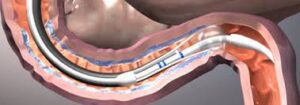
 Mucosal resurfacing refers to an endoscopic procedure in which the mucosal layer of the gastrointestinal tract, most commonly the duodenum, is intentionally ablated and allowed to regenerate, with the goal of altering mucosal function and improving metabolic parameters.
The most studied form is duodenal mucosal resurfacing (DMR), which uses hydrothermal ablation delivered via a balloon catheter to the duodenal mucosa.
This procedure is minimally invasive and has been investigated as a treatment for insulin-resistant metabolic diseases, such as type 2 diabetes.
Modifying the duodenal mucosa can impact glucose homeostasis, as seen in metabolic improvements following bariatric surgery.
DMR aims to mimic some of these effects without the need for surgical bypass.
After ablation, the mucosa heals and regenerates, with studies showing complete mucosal healing and regrowth within weeks, and improvements in glycemic and hepatic measures in treated patients.
Resurfacing is a deliberate therapeutic intervention designed to reset mucosal function.
Duodenal mucosal resurfacing (DMR) has shown modest efficacy in improving glycemic control and hepatic parameters in patients with type 2 diabetes, with an acceptable safety profile in short- and medium-term studies.
Current evidence is insufficient to support routine clinical use outside of research settings.
Recent randomized controlled and single-arm trials demonstrate that DMR can reduce HbA1c by approximately 0.9–1.8% at 6–12 months, with improvements in insulin sensitivity and liver fat, independent of significant weight loss.
The REVITA-2 RCT found statistically significant improvements in HbA1c and liver fat in European patients, but not in Brazilian patients, highlighting population heterogeneity and a strong sham effect in some cohorts.
Meta-analyses confirm beneficial metabolic effects at 3 and 6 months, but the magnitude of benefit and durability remain uncertain.
Most adverse events are mild and transient, such as gastrointestinal symptoms.
Serious complications are rare but include duodenal stenosis, which has been successfully managed with endoscopic dilation.
No cases of perforation, pancreatitis, or hemorrhage have been reported.
Histological studies show complete mucosal healing within weeks and no evidence of long-term inflammation or fibrosis.
DMR is a promising investigational therapy for metabolic disease, but further large-scale, long-term studies are needed to establish its efficacy, safety, and optimal patient selection.