
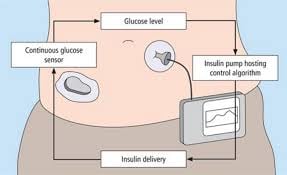
 Closed loop insulin systems, often called “artificial pancreas” systems, in diabetes management by automating insulin delivery based on continuous glucose monitoring.
These systems combine three key components:
Continuous Glucose Monitor (CGM) that measures blood glucose levels every few minutes.
Insulin pump that delivers rapid-acting insulin subcutaneously.
Control algorithm that calculates how much insulin to deliver based on glucose readings, trends, and user inputs
The algorithm continuously adjusts basal insulin rates and delivers correction boluses to keep glucose levels in target range, typically 70-180 mg/dL.
Hybrid closed loop systems are currently available but still requires user input for meal announcements – you tell the system you’re about to eat and estimate carbohydrates, then it handles the rest.
Advanced hybrid systems aim to eliminate meal announcements entirely, using more sophisticated algorithms that can detect and respond to meals automatically.
These systems significantly improve:
Time in range (70-180 mg/dL) – often increasing from 60-70% to 70-80%
Overnight glucose control
Reduction in severe hypoglycemic events
Overall hemoglobin A1c levels
Improves quality of life and sleep quality for patients and families
Challenges and Limitations
The main technical problems with closed loop systems:
Rapid-acting insulin takes 15-20 minutes to start working, creating control delays.
CGMs have some lag time and occasional inaccuracies.
Individual variability:People respond differently to insulin based on stress, illness, exercise, and hormonal changes
Meal disturbances: Large meals create significant glucose excursions that are difficult to control perfectly.
Use in type one diabetes with pregnancy is supported by finding of increased time in specific glucose range.