
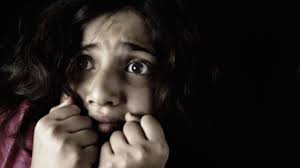
Fear is an unpleasant emotion that arises in response to perceived dangers or threats.
Fear causes physiological and psychological changes.
Fear may produce behavioral reactions withan aggressive response or fleeing the threat, commonly known as the fight-or-flight response.
Extreme cases of fear can trigger an immobilized freeze response.
Fear in humans can occur in response to an immediate stimulus or anticipation of a future threat.
Fear is involved in some mental disorders, particularly anxiety disorders.
Fear is modulated by cognition and learning.
Fear is judged as rational and appropriate, or irrational and inappropriate.
Irrational fears are phobias.
Fear is closely related to the emotion anxiety, which occurs as the result of often future threats that are perceived to be uncontrollable or unavoidable.
The fear response serves survival.
Fears are not solely dependent on their nature but also shaped by social relations and culture, which guide an individual’s understanding of when and how to fear.
Many physiological changes in the body are associated with fear, summarized as the fight-or-flight response.
Fear is an innate response for coping with danger, it works by accelerating the breathing rate, heart rate, vasoconstriction of the peripheral blood vessels leading to blood pooling, dilating the pupils, increasing muscle tension including the muscles attached to each hair follicle to contract and causing piloerection, making a cold person warmer, sweating, increased blood glucose, increased serum calcium, increase in white blood cells, increased alertness leading to sleep disturbance and dyspepsia.
This primitive mechanism may help an organism survive by either running away or fighting the danger.
Consciousness realizes an emotion of fear with a series of physiological changes.
There are observable physical reactions in individuals who experience fear: they might experience a feeling of dizziness, lightheaded, feel like they are being choked, sweating, shortness of breath, vomiting or nausea, numbness or shaking and any other like symptoms.
These bodily reactions inform the individual that they are afraid and should proceed to remove or get away from the stimulus that is causing that fear.
The capacity to fear is part of human nature.
Certain fears, such as animals, heights, are much more common than others.
This phenomenon is known as preparedness, generating fear of dangerous situations making it more likely to survive and reproduce; preparedness is theorized to be a genetic effect that is the result of natural selection.
Humans innovate specific fears as a result of learning.
Fear can be learned by experiencing or watching a frightening traumatic incident..
Fear can develop from personal history and from brain area triggers in areas such as the amygdala.
Fear is affected by cultural and historical context.
Fear of victimization is a function of perceived risk and seriousness of potential harm.
Some of the most common fears are of demons and ghosts, the existence of evil powers, cockroaches, spiders, snakes, heights, water, enclosed spaces, tunnels, bridges, needles, social rejection, failure, examinations, public speaking, fear of terrorist attacks, illness, death, war, criminal or gang violence, being alone, the future, nuclear war, flying, clowns, intimacy, people, and driving.
Fear of the unknown or irrational fear is caused by negative thinking or worry, which arises from anxiety accompanied by a subjective sense of apprehension or dread.
Irrational fear shares a common neural pathway with other fears
Such a pathway engages the nervous system to mobilize bodily resources in the face of danger or threat.
Chronic irrational fear can create comorbidity with an anxiety disorder.
Being scared may cause anticipatory fear of what may lie ahead rather than planning and evaluating for the same.
The ambiguity of situations that tend to be uncertain and unpredictable can cause anxiety in addition to other psychological and physical problems: especially those who engage it constantly (war-ridden places or in places of conflict, terrorism, abuse).
Poor parenting that instills fear can also debilitate a child’s psyche development or personality.
Ambiguous and mixed messages can affect their self-esteem and self-confidence.
Fear is often divided into two main categories; namely, avoidance/flight and immobility.
Protective responses, including startle and looming responses, defensive burying, and social responses including alarm vocalizations and submission
Finally, immobility is often divided into freezing and tonic immobility.
Fear behavior performed is determined by the level of fear as well as the specific context, such as environmental characteristics: escape route present, distance to refuge, the presence of a discrete and localized threat, the distance between threat and subject, threat characteristics, the characteristics of the subject under threat-size, physical condition, speed, degree of crypsis, social conditions, and the amount of experience with the type of the threat.
Humans have specific defense reactions, such as the flight-or-fight, which also include pseudo-aggression, fake or intimidating aggression and freeze response to threats, which is controlled by the sympathetic nervous system.
The amygdala communicates both directions between the prefrontal cortex, hypothalamus, the sensory cortex, the hippocampus, thalamus, septum, and the brainstem.
The amygdala plays an important role in defensive reactions, and essential for associative learning of such defense reactions.
Defensive reactions are learned through interaction with the environment and others.
An emotional response is created when signals have been relayed between the different regions of the brain, and activating the sympathetic nervous systems; which controls the flight, fight, freeze, fright, and faint response.
Often a damaged amygdala can cause impairment in the recognition of fear.
Such an impairment can cause a lack of fear, and often one can become overly confident, confronting larger peers, or walking up to predatory creatures.
Fear learning changes across the lifetime due to natural developmental changes in the brain.
This includes changes in the prefrontal cortex and the amygdala.
Sensory cortex organizes information for dissemination to the hypothalamus for fight or flight, the amygdalae for fear and the hippocampus for memory.
Most neurobiological events associated with fear are the two amygdalae, located behind the pituitary gland.
Each amygdala is part of a circuitry of fear learning, essential for proper adaptation to stress and specific modulation of emotional learning memory.
With a threatening stimulus, the amygdalae generate the secretion of hormones that influence fear and aggression.
The amygdalae may elicit the release of hormones into the body to put the person into a state of alertness, in which they are ready to move, run, or fight.
This defensive response is generally referred to in physiology as the fight-or-flight response regulated by the hypothalamus, part of the limbic system.
Once the person is in safe mode, the amygdalae will send this information to the medial prefrontal cortex where it is stored for similar future situations, which is known as memory consolidation.
Some of the hormones involved during the state of fight-or-flight include epinephrine, norepinephrine and cortisol.
Epinephrine regulates heart rate and metabolism as well as dilating blood vessels and air passages
Norepinephrine increasing heart rate, blood flow to skeletal muscles and the release of glucose from energy stores, and cortisol which increases blood sugar, increases circulating neutrophilic leukocytes, calcium amongst other things.
Following a fear incident, the amygdalae and hippocampus record the event through synaptic plasticity.
Such stimulation to the hippocampus will cause the individual to remember many details surrounding the situation.
Plasticity and memory formation in the amygdala are generated by activation of the neurons in the region.
Synaptic plasticity of the neurons leading to the lateral amygdalae occurs with fear conditioning.
Synaptic plasticity forms permanent fear responses such as post-traumatic stress disorder (PTSD) or a phobia.
MRI and fMRI scans have shown that the amygdalae in individuals diagnosed with bipolar or panic disorder are larger and wired for a higher level of fear.
Pathogens can suppress amygdala activity.
Several brain structures other than the amygdalae have also been observed to be activated when individuals are presented with fearful vs. neutral faces, namely the occipitocerebellar regions including the fusiform gyrus and the inferior parietal / superior temporal gyri.
Fearful eyes, brows and mouth seem to separately produce activation in these brain responses.
The hormone oxytocin related to stress and sex reduces activity in your brain fear center.
In threatening situations, insects, aquatic organisms, birds, reptiles, and mammals emit odorant substances, initially called alarm substances, which are chemical signals called alarm pheromones.
Alarm pheromones are used for organisms to defend themselves and at the same time to inform members of the same species of danger and leads to observable behavior change like freezing, defensive behavior, or dispersion depending on circumstances and species.
Although alarm pheromones have not been physically isolated and their chemical structures have not been identified in humans so far, there is evidence for their presence.
Androstadienone is a steroidal, endogenous odorant, is a pheromone candidate found in human sweat, axillary hair and plasma.
The closely related compound androstenone is involved in communicating dominance, aggression or competition; sex hormone influences on androstenone perception in humans showed a high testosterone level related to heightened androstenone sensitivity in men, a high testosterone level related to unhappiness in response to androstenone in men, and a high estradiol level related to disliking of androstenone in women.
Brain imaging evidence that human responses to fear chemosignals may be gender-specific.
Stress-induced sweat from males produced a comparably strong emotional response in both females and males, stress-induced sweat from females produced markedly stronger arousal in women than in men.
This gender-specificity to the right amygdala and strongest in the superficial nuclei.
The response to female fear-induced signals is likely based on processing the meaning-the emotional level, rather than the strength of chemosensory cues from each gender, the perceptual level.
Volunteers smelling androstadienone, masked with clove oil scent responded faster, especially to angry faces than those smelling clove oil only, which was interpreted as androstadienone-related activation of the fear system.
Androstadienone is known to influence the activity of the fusiform gyrus which is relevant for face recognition.
It has been proposed that fear behavior is caused by an inconsistency between a preferred, or expected, situation and the actually perceived situation, and functions to remove the inconsistent stimulus from the perceptual field, for instance by fleeing or hiding, thereby resolving the inconsistency.
This approach puts fear in a broader perspective, also involving aggression and curiosity.
Cognitive behavioral therapy has been successful in helping people overcome their fear.
An active and successful approach to treating fear involves people repeatedly confronting their fears.
By confronting their fears in a safe manner a person can suppress the fear-triggering memories or stimuli.
Exposure therapy helps up to 90% of people with specific phobias to significantly decrease their fear over time.
Systematic desensitization is a psychological treatment which is a type of behavior therapy used to completely remove the fear or produce a disgusted response to this fear and replace it.
The replacement is relaxation and occurs through conditioning.
Through such conditioning treatments, muscle tensioning lessens and deep breathing techniques aid in de-tensioning.
Journal entries are a healthy method of expressing one’s fears without compromising safety or causing uncertainty.
Creating a fear ladder, writing down all fears and scoring them on a scale of one to ten, and then addressing their phobia, starting with the lowest number.
Religion can help some individuals cope with fear.
People who have damage to their amygdalae, are unable to experience fear.
When people are faced with their own thoughts of death, they either accept that they are dying or will die because they have lived a full life or they will experience fear.
A theory was developed in response to this, which is called the terror management theory.
A person’s cultural worldviews-religion, values, will mitigate the terror associated with the fear of death through avoidance, and finding solace in their death-denying beliefs, such as their religion.
Some people cope with their death related fears is pushing any thoughts of death into the future or by avoiding these thoughts all together through distractions.
Death anxiety is multidimensional; fears related to one’s own death, the death of others, fear of the unknown after death, fear of obliteration, and fear of the dying process, which includes fear of a slow death and a painful death.
For fear in general to make sense, three conditions should be met: the object of fear needs to be something conceived as bad, there needs to be a non-negligible chance that the bad state of affairs will happen, and there needs to be some uncertainty about the bad state of affairs.
The amount of fear should be appropriate to the size of the bad.
Psychologists have tested the hypotheses that fear of death motivates religious commitment, and that assurances about an afterlife alleviate the fear, with equivocal results.
Fear may be politically and culturally manipulated to persuade citizenry of ideas which would otherwise be widely rejected or dissuade citizenry from ideas which would otherwise be widely supported.
Nation-states manage the fear of disasters not only to provide their citizens with an explanation about the event or blaming some minorities, but also to adjust their previous beliefs.
Fear can alter how a person thinks or reacts to situations because fear has the power to inhibit one’s rational way of thinking.
People who do not experience fear, are able to use fear as a tool to manipulate others.
People who are experiencing fear, seek preservation through safety and can be manipulated by a person who is there to provide that safety that is being sought after.
When we’re afraid, a manipulator can talk us out of the truth we see right in front of us.
A manipulator can use our fear to manipulate us out the truth and instead make us believe and trust in their truth: Politicians are notorious for using fear to manipulate the people into supporting their policies.
Fear of failure can actually be a determinant of creating achievement goals as well as how it could be used in the actual act of achievement.
There are five aversive consequences of fear of failing including: experiencing shame and embarrassment, devaluing one’s self-estimate, having an uncertain future, important others losing interest, upsetting important others.
Fear can be both beneficial and detrimental depending on the context:
Beneficial Aspects of Fear:
Survival Mechanism: Avoiding dangerous situations and make quick decisions in life-threatening scenarios.
Motivation-It can motivate us to take proactive measures to ensure our safety and well-being.
Focus and Alertness:-Fear can heighten our senses and make us more aware of our surroundings, improving focus and alertness.
Detrimental Aspects of Fear:
Paralysis+Excessive fear can lead to paralysis or inaction, preventing individuals from taking necessary steps to address or escape a threat.
Chronic Stress-Persistent fear can cause chronic stress, leading to health issues such as anxiety disorders, depression, and cardiovascular problems.
Irrational Behavior-It can lead to irrational or harmful decisions if not managed properly.
To understanding and manage fear is crucial for maintaining mental and physical health: mindfulness, cognitive behavioral therapy, and relaxation exercises can help individuals cope with and reduce unreasonable fears.