
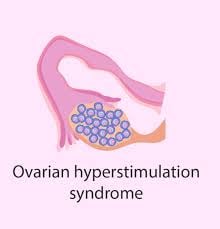
 Ovarian hyperstimulation syndrome (OHSS) is a complication of controlled ovarian stimulation, most commonly encountered during assisted reproductive technology (ART) cycles.
OHSS is characterized by increased capillary permeability, leading to a shift of fluid from the intravascular compartment to third spaces such as the peritoneal, pleural, and, rarely, pericardial cavities.
The clinical manifestations of OHSS range from mild abdominal discomfort and ovarian enlargement to severe, life-threatening complications including ascites, hemoconcentration, electrolyte imbalances, pleural effusion, acute renal insufficiency, thromboembolism, and multiorgan dysfunction.
Mild OHSS: Abdominal bloating and discomfort Mild weight gain Nausea Moderate to severe OHSS: Significant abdominal pain and swelling Rapid weight gain of more than 2 pounds per day Nausea and vomiting Decreased urination Shortness of breath Fluid accumulation in the abdomen and chest
Its pathophysiology is primarily driven by supraphysiologic levels of vascular endothelial growth factor (VEGF) produced by luteinized granulosa cells in response to human chorionic gonadotropin (hCG), resulting in increased vascular permeability and third spacing.
OHSS develops when the ovaries overrespond to fertility medications, especially those containing human chorionic gonadotropin (hCG) or gonadotropins.
The ovaries become enlarged and leak fluid into the abdominal cavity.
The OHSS is classified by its severity:mild, moderate, severe, or critical and by timing as early, related to exogenous hCG trigger, or late, related to endogenous hCG from pregnancy.
OHSS has become rare with modern preventive strategies.
Risk factors include high ovarian response, elevated estradiol, polycystic ovary syndrome, pregnancy, especially, mulyiple, young age (under 35), high number of eggs retrieved during IVF, and previous history of OHSS
Its hallmark features are intravascular hypovolemia, third spacing (ascites, pleural effusion), and potential for thromboembolic events.
Management:
Most cases are mild and resolve on their own within a week or two.
Severe cases may require hospitalization for monitoring and supportive care, including IV fluids, pain management, and sometimes procedures to drain excess fluid.
Prevention: Careful medication dosing, using GnRH agonist triggers instead of hCG, and sometimes freezing embryos to transfer later.