
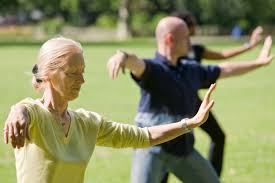
 Tai chi, is an ancient Chinese mind-body practice that combines slow, deliberate movements with deep breathing and meditation.
A balance- based exercise that improves strength, balance, and physical function and prevents falls in elderly adults.
Originally developed as a martial art, it is widely practiced today for its significant health benefits.
Tai chi involves performing a series of graceful, flowing postures in a continuous sequence.
The movements are circular, relaxed, and low-impact, making it suitable for people of all ages and fitness levels, including older adults and individuals with chronic health conditions like arthritis.
Tai chi emphasizes a state of “relaxed alertness,” cultivating inner peace and awareness through the coordination of movement, mental focus, and breath.
Regular practice can lead to improved balance, flexibility, strength, and coordination.
It is particularly effective in reducing the risk of falls in older adults.
It may help alleviate stress, anxiety, and depression by promoting a sense of serenity and calm.
It can assist in managing symptoms of various conditions, including fibromyalgia, high blood pressure, and Parkinson’s disease.
There are several major styles of tai chi, each with their own characteristics.
Chen Style: Known for combining slow, soft movements with explosive power and low stances.
Yang Style: The most popular style, it features higher stances and gentle, slow, and flowing movements, making it ideal for beginners.
Wu, Hao, and Sun Styles: Sun style being particularly recommended for people with arthritis due to its gentle nature.
The number of specific exercise forms varies by style and master.